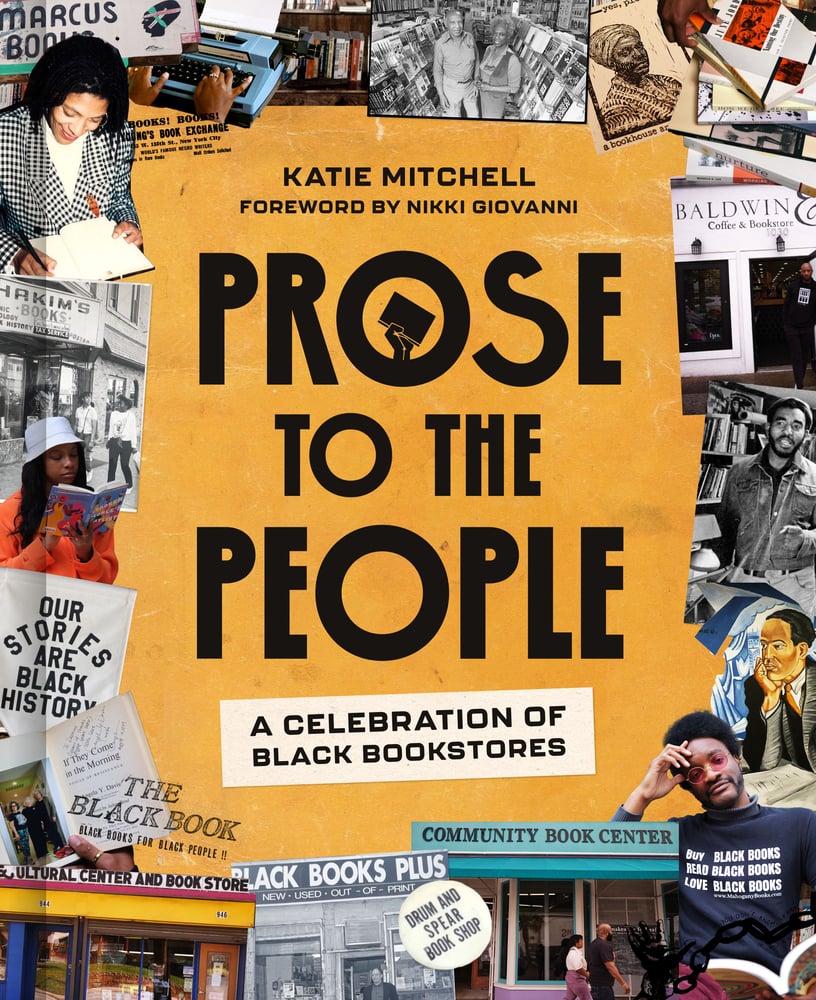
Prose to the People
A stunning visual homage to Black bookstores, featuring a selection of shops around the country alongside essays that celebrate the history, community, activism, and culture these spaces embody, with an original foreword by Nikki Giovanni.
Black literature is perhaps the most powerful, polarizing force in the modern American zeitgeist. Today—as Black novels draw authoritarian ire, as Black memoirs shape public debates, as Black polemics inspire protest petitions—it’s more important than ever to highlight the places that center these stories: Black bookstores.
Traversing teeming metropolises and tiny towns, Prose to the People explores a these spaces, chronicling these Black bookstore’s past and present lives. Combining narrative prose, eye-catching photography, one-on-one interviews, original essays, and specially curated poetry, Prose to the People is a reader’s road trip companion to the world of Black books.
Thoughtfully curated by writer and Black bookstore owner Katie Mitchell, Prose to the People is a must-have addition to the shelves of anyone who loves book culture and Black history. Though not a definitive guide, this dynamic book centers profiles of over fifty Black bookstores from the Northeast to the mid-Atlantic, the South, and the West Coast, complete with stunning original and archival photography.
Interspersed throughout are essays, poems, and interviews by New York Times bestsellers Kiese Laymon, Rio Cortez, Pearl Cleage, and many more journalists, activists, authors, academics, and poets that offer deeper perspectives on these bookstores’ role throughout the diaspora. Complete with a foreword by world-renowned poet and activist Nikki Giovanni, Prose to the People is a beautiful tribute to these vital pillars of the Black community.